

Key Highlights:
- Wearing your retainer consistently prevents teeth from gradually shifting back.
- Cleaning retainers daily stops bacteria and odour from building up over time.
- Invisible dental braces still need the same nightly retainer follow-up routine.
- Avoiding hot drinks with retainers in helps prevent warping or discolouration.
- Regular check-ups help catch small shifts before they become bigger problems.
Life After Braces: What Comes Next
Getting your braces off is a bit of a milestone, but the work doesn’t quite stop there. Teeth are naturally inclined to drift back toward their original position, which is why the months after treatment matter just as much as the treatment itself. Retainers for teeth are the main tool for holding results in place, and a few simple daily habits can make a real difference in keeping your smile where it should be.
At Align Braces Clinic, we spend time with every patient explaining what post-treatment care actually looks like day to day, whether they finished treatment with traditional metal braces or invisible dental braces. Most of the maintenance happens at home rather than in the clinic chair. This guide covers the routines worth building into your schedule, from retainer wear to everyday cleaning habits.
Getting Retainer Wear Right
Retainers for teeth are the single most important part of post-braces care, and skipping even a few nights can allow small shifts to creep in. Most patients wear their retainer full-time for the first few months, before gradually moving to nights only once a dentist confirms it’s safe to do so.
| Timeframe | Typical Wear Pattern |
| First 3–6 months | Worn almost full-time, removed only for eating |
| 6–12 months | Nights only, as advised by your dentist |
| Beyond 1 year | Nights only, often indefinitely for long-term stability |
Sticking to whatever schedule your dentist sets is far more important than guessing based on how your teeth feel.
Keeping Your Retainer Clean
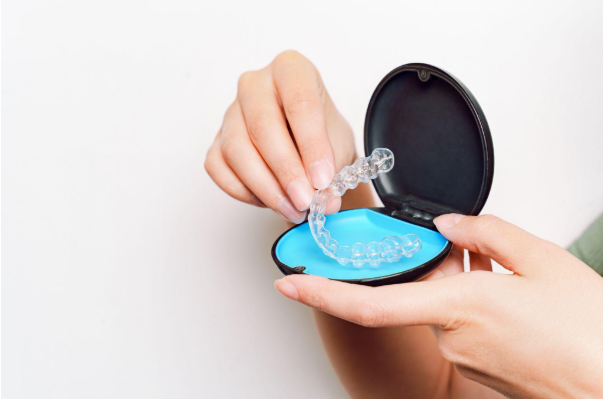
Retainers for teeth sit against your gums and enamel for hours at a time, so they need regular cleaning just like your teeth do. A soft toothbrush and lukewarm water are usually enough for daily upkeep, while a dedicated retainer cleaning solution once or twice a week helps remove buildup that brushing alone might miss.
Avoid hot water or direct sunlight, both of which can warp clear retainers over time. Storing it in its case whenever it’s out of your mouth also reduces the chance of it being lost, bent, or accidentally thrown away with a napkin. A quick rinse before and after each wear keeps things simple without adding much to your existing routine.
Everyday Habits That Support Straight Teeth
Even patients who switched to invisible dental braces during treatment need to carry a few habits into the retainer phase. Good general oral hygiene remains just as important, since retainers can trap food particles against teeth if brushing gets skipped or rushed.
Here are a few habits worth building into your routine:
- Brush and floss before inserting your retainer each night
- Rinse your retainer with water before and after wear
- Avoid chewing gum or eating while a removable retainer is in
- Keep up with your scheduled dental check-ups
Small, consistent habits like these tend to matter more than any single big effort.
Watching for Early Signs of Shifting
Even with good habits, it’s worth knowing what to watch for. A retainer that suddenly feels tight is often the earliest sign that teeth have started to move, and it’s worth mentioning at your next visit rather than waiting it out. Catching a small shift early is usually far simpler to manage than addressing a larger one later.
Patients who originally wore invisible dental braces sometimes assume the retainer stage will be less demanding, but the same consistency still applies, regardless of what came before. Sticking to the routine keeps results stable long after treatment ends.
Keeping Your Smile Straight for the Long Run
Maintaining a straight smile after braces isn’t complicated, but it does rely on consistency. Wearing your retainer as instructed, keeping it clean, and staying on top of regular check-ups together form the foundation of long-term results. Skipping any one of these for too long tends to be where most relapses start.
If you’ve noticed any changes in how your retainer fits, or simply want guidance on your current routine, it’s worth checking in sooner rather than later.
Contact Align Braces Clinic to book a check-up or ask any questions about your retainer routine.